
Rangiroa: a guide to the atoll
The largest atoll in French Polynesia, in the Tuamotu archipelago: understand the lagoon, discover what there is to see and do, then plan your stay.
Read more in Rairoa magazine
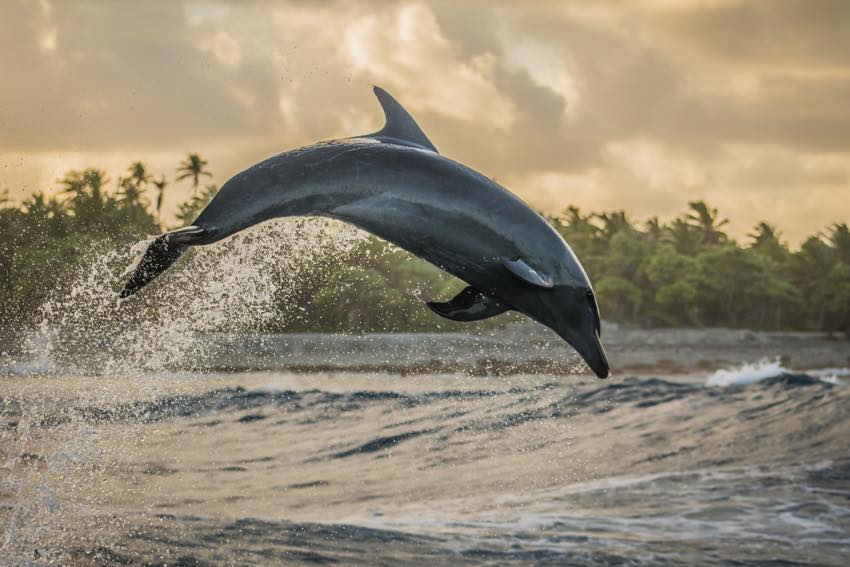 🐬 The dolphins of Tiputa Pass
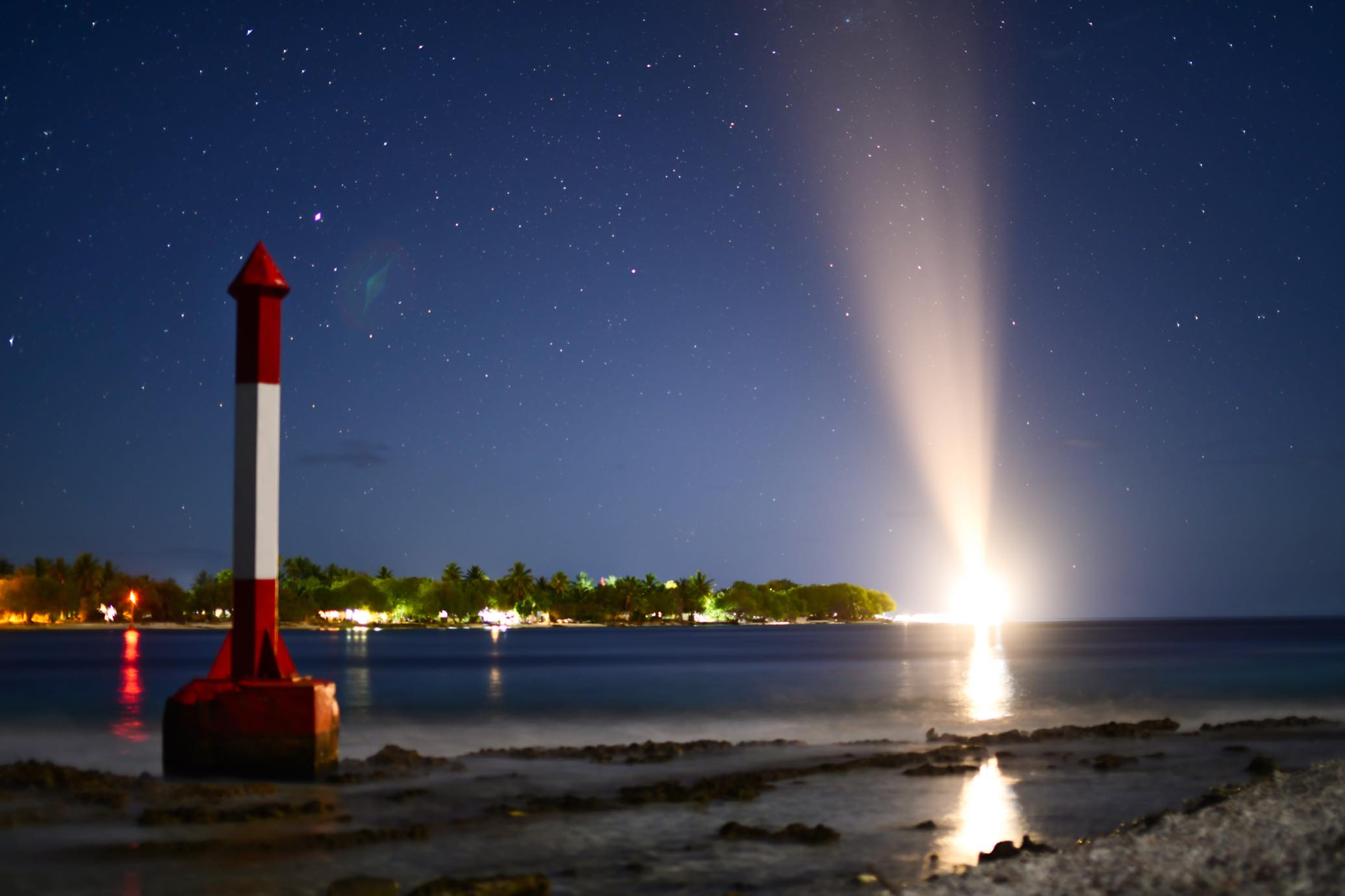 🏝️ Tiputa, the first village
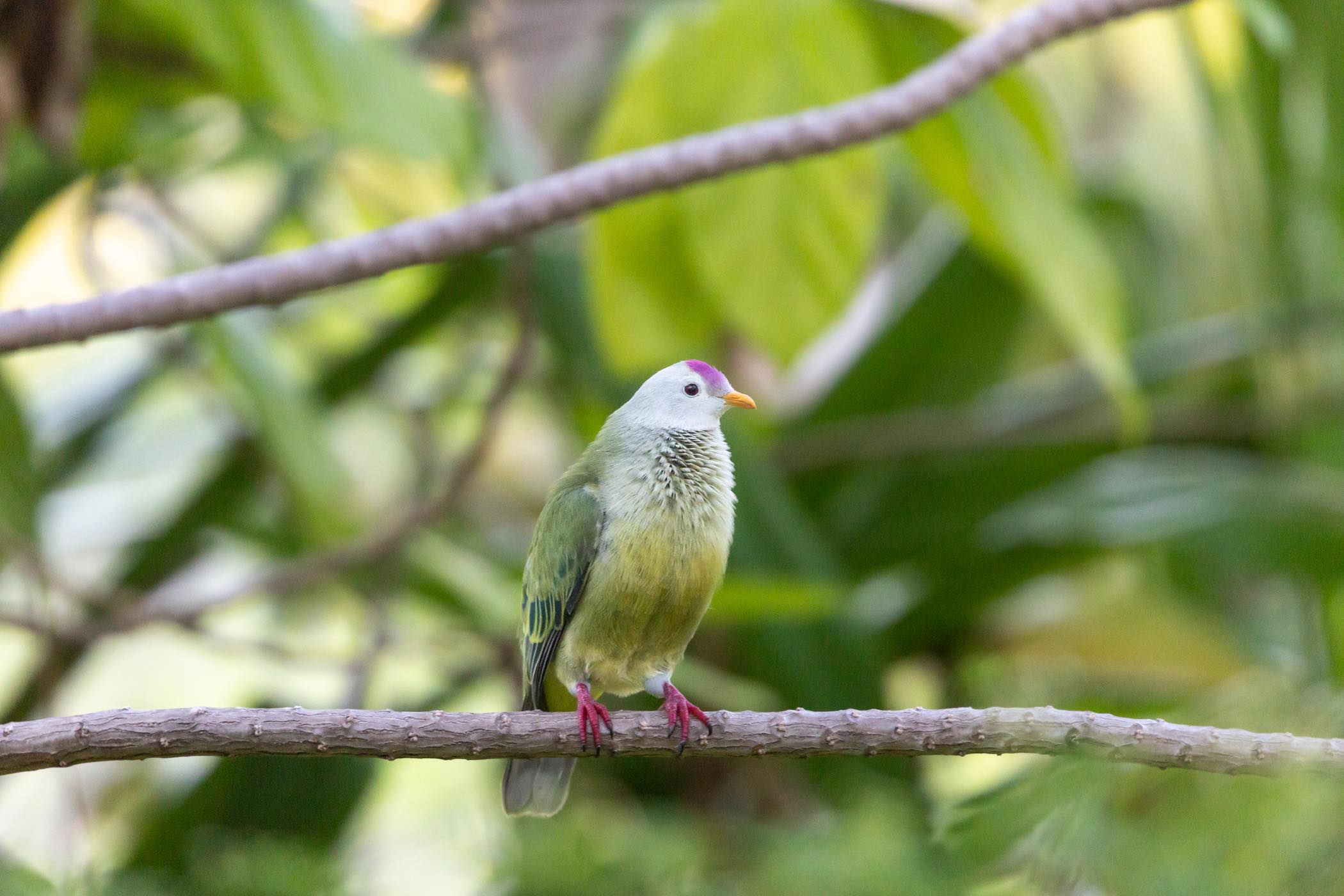 🐦 The birds of the Blue Lagoon
Rangiroa is the largest atoll in French Polynesia and the second-largest atoll in the world by lagoon surface area. Located in the Tuamotu archipelago, about 355 km northeast of Tahiti, it forms an immense ring of land and coral around a true inland sea ; a lagoon so vast that the whole island of Tahiti could fit inside it.
1Rangiroa in brief
Rangiroa (also spelled Ra'iroa) is an atoll in the Tuamotu archipelago, in French Polynesia.
An atoll is not a "classic" island: it is a ring of coral reef, dotted with islets of sand and coconut palms called motu, surrounding a lagoon. There is no mountain or relief, the highest point rises no more than a dozen metres.
| Archipelago | Tuamotu (French Polynesia) |
| Distance from Tahiti | ≈ 355 km to the northeast |
| Lagoon surface area | ≈ 1,446 km² |
| Lagoon dimensions | ≈ 80 km long by 32 km wide |
| Maximum depth | ≈ 35 m |
| Land area | ≈ 79 km² (7,900 hectares) |
| Number of motu | several hundred (≈ 415 groups) |
| Population | ≈ 2,800 inhabitants |
| Main villages | Avatoru and Tiputa |
| Passes | Tiputa Pass and Avatoru Pass |
2Understanding Rangiroa atoll
Here, geography is part of the experience. Understanding how the atoll is organised helps you understand what you are coming to find.
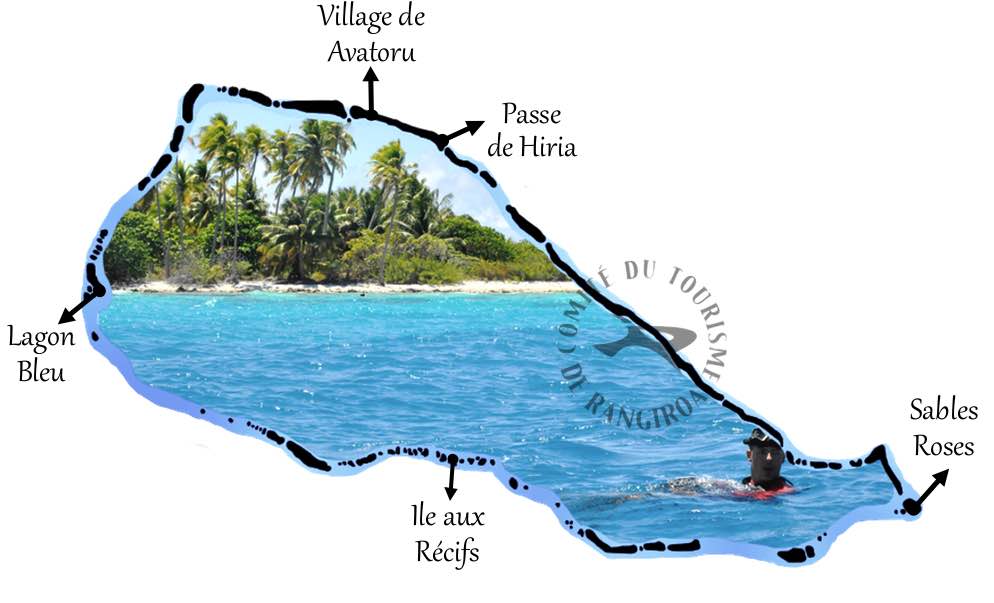
The lagoon
It is the heart of the destination: a vast turquoise expanse of nearly 1,446 km², 80 km long. Its shallow depth (35 m at most) and its colour make it a unique setting. You cannot drive around Rangiroa: the lagoon is so vast that many sites can only be reached by boat.
The motu and the reef
The ring of the atoll is formed of motu — islets of sand and coconut palms — separated by ho'a, shallow channels where the open ocean meets the lagoon. The reef as a whole stretches over more than 200 km in circumference.
The passes
Two large passes connect the lagoon to the ocean: Tiputa Pass and Avatoru Pass. These are channels swept by powerful tidal currents, and therefore an extraordinary concentration of marine life. Tiputa Pass is one of the most renowned dive sites in the world.
The two villages
Life on the atoll is concentrated in two neighbouring villages at the northern end: Avatoru, to the west, home to the airport and most of the services; and Tiputa, the most populous village, on the other side of the pass. The two are about 7 km apart, but separated by the pass: to go from one to the other, you take a water shuttle (taxi-boat).
3What to see in Rangiroa?
A few sites appear in every guide, and for good reason.
The Blue Lagoon
A lagoon within the lagoon: a shallow natural pool of turquoise water, sheltered by a barrier of motu, reached on a day excursion. One of the most photographed landscapes in Rangiroa.
Île aux Récifs (Reef Island)
A wilder site to the south of the atoll, known for its raised fossilised coral formations (the feo) that create an almost mineral, timeless landscape.
Les Sables Roses (Pink Sands)
A distant beach at the southeastern tip of the atoll, where the sand takes on pink hues. It is the farthest excursion — often a full day of sailing — and the most exclusive.
Tiputa Pass
Beyond diving, the pass is a spectacle in itself: people come to watch the bottlenose dolphins playing in the current and, depending on the season, manta rays, sharks and turtles passing through.
4What to do in Rangiroa?
Scuba diving
Rangiroa is a world-renowned diving destination. Tiputa Pass and Avatoru Pass offer spectacular drift dives among grey sharks, dolphins, rays and schools of fish. Learn more about diving in Rangiroa →
Snorkelling
No tanks needed to enjoy the underwater world: snorkelling (mask, snorkel and fins) lets you observe corals and multicoloured fish, especially in the "aquarium" and the shallow areas of the lagoon.
Lagoon excursions
The Blue Lagoon, Île aux Récifs, Les Sables Roses, a tour of the lagoon, day trips to the motu… Boat excursions are the best way to discover the vastness of the atoll. See the excursions →
Dolphin watching
At Tiputa Pass, bottlenose dolphins come to surf in the current almost all year round — one of the most memorable encounters in Rangiroa.
Cycling and exploring the villages
Between Avatoru and the airport, the main road is easy to cover by bike: a relaxed way to discover local life, the churches, the coconut groves and the shops. Bike rental and transport →
Tahitian pearls
Rangiroa has a long tradition of pearl farming. Visiting a pearl farm shows how the famous Tahitian black pearl is created. Discover Gauguin's Pearl →
The Rangiroa vineyard
Rangiroa is one of the very few places in the world where wine is produced on a coral atoll: the Vin de Tahiti, made from vines grown on the motu. Discover Vin de Tahiti →
5Wildlife and flora
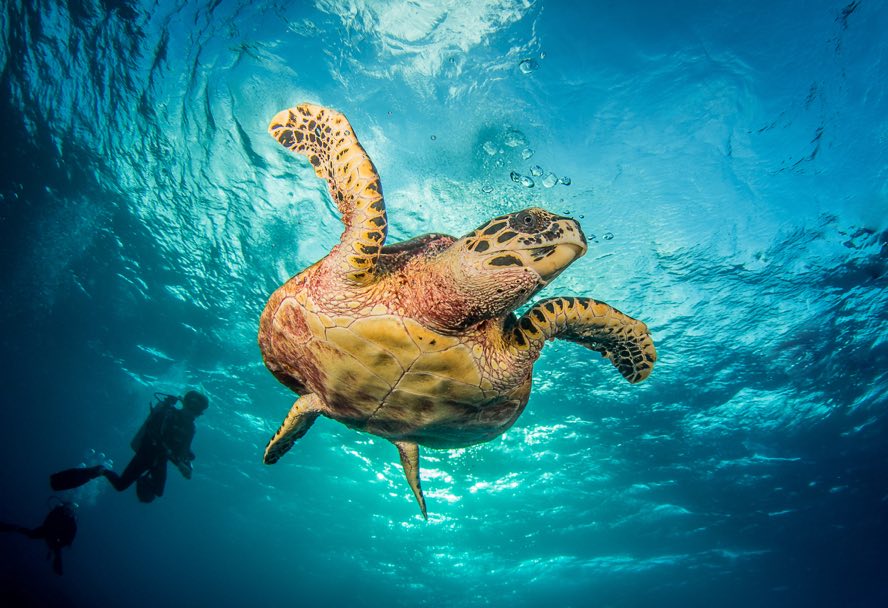
Underwater
This is Rangiroa's great treasure. Depending on the site and the season, you may encounter: bottlenose dolphins, sharks (grey, whitetip, sometimes hammerheads), manta rays and eagle rays, turtles, and thousands of tropical fish on some of the most beautiful coral reefs in the world.
On land and in the sky
The ring of the atoll is covered in coconut groves. The motu are home to seabirds (terns and others) and, on some remote islets, genuine bird sanctuaries.
6The villages
Avatoru
The main village in the northwest of the atoll, Avatoru is home to the airport, the administration, the post office, several churches and much of the shops and guesthouses. It is also the historic heart of the atoll's pearl industry.
Tiputa
On the other side of the pass, this is the most populous village in Rangiroa, quieter and more traditional. It is reached by water shuttle from Avatoru. Opposite the village, the pass offers the famous dolphin spectacle.
7How to get to Rangiroa?
You reach Rangiroa by plane from Tahiti. The flight from Tahiti-Faa'a airport (PPT) to Rangiroa airport (RGI) takes about 1 hour, with regular connections operated by Air Tahiti and Air Moana. Rangiroa is also connected to other Tuamotu atolls such as Tikehau and Fakarava.
Some travellers also arrive as part of a cruise through the Tuamotu.
8Getting around Rangiroa
Once there, you have several options depending on what you want to do:
- Bike — ideal for exploring the main road between Avatoru and the airport and discovering the village at your own pace.
- Scooter / rental car — for more independence on the land part of the atoll.
- Taxi — for transfers, particularly from the airport (remember to book before you arrive in Rangiroa).
- Taxi-boat (water shuttle) — essential to cross from Avatoru to Tiputa, and to reach the motu and the excursion sites.
9Where to stay in Rangiroa?
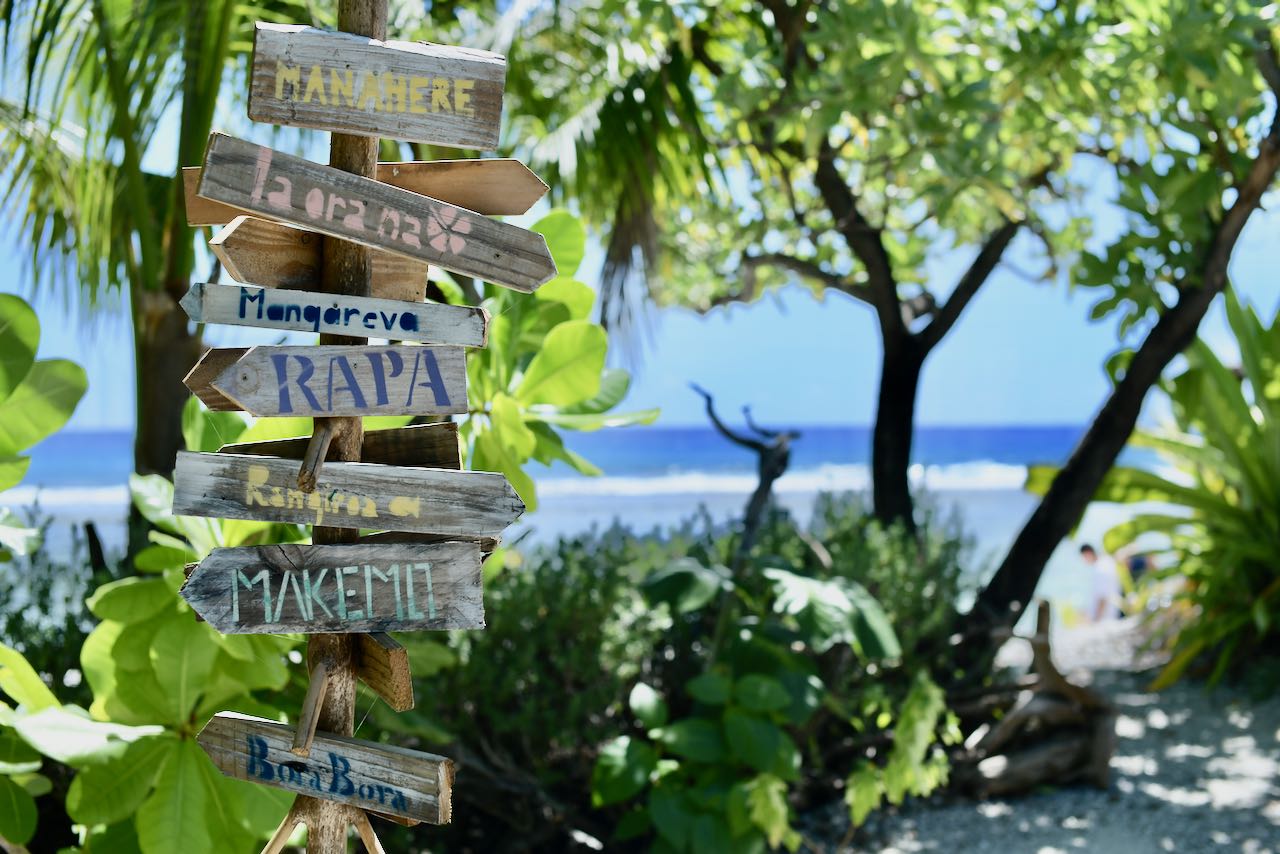
Accommodation is concentrated mainly between Avatoru and Tiputa. You will mostly find family guesthouses (pensions de famille), warm and close to local life; hotels and small-scale accommodation; and other options (rentals, stays on a motu…).
10When to go to Rangiroa?
Rangiroa can be visited all year round, with two main seasons:
- Dry season (May to October) — the most pleasant period: sunny weather, lower humidity, cooling trade winds. The best window for outdoor activities and excursions.
- Wet season (November to April) — hotter and rainier, but with particularly warm lagoon water, appreciated by divers.
| You want… | Best time |
|---|---|
| The best overall climate | May to October |
| To avoid the crowds | May-June, September-October |
| Very warm water for diving | November to April |
| To see the Tiputa dolphins | all year round |
Indicative temperatures: air ≈ 25–30 °C, lagoon water ≈ 26–28 °C depending on the season.
11How long to stay in Rangiroa?
Rather than prescribing a length, here are the possibilities:
1 to 2 days
A quick visit: one flagship excursion (the Blue Lagoon) or a dive.
3 to 4 days
Several excursions, some diving and a real discovery of the atoll. The most balanced length for a first stay.
5 days or more
A more relaxed pace: several outings at sea, the distant excursions (Les Sables Roses), local life, the pearl farm and the vineyard.
12Map of Rangiroa
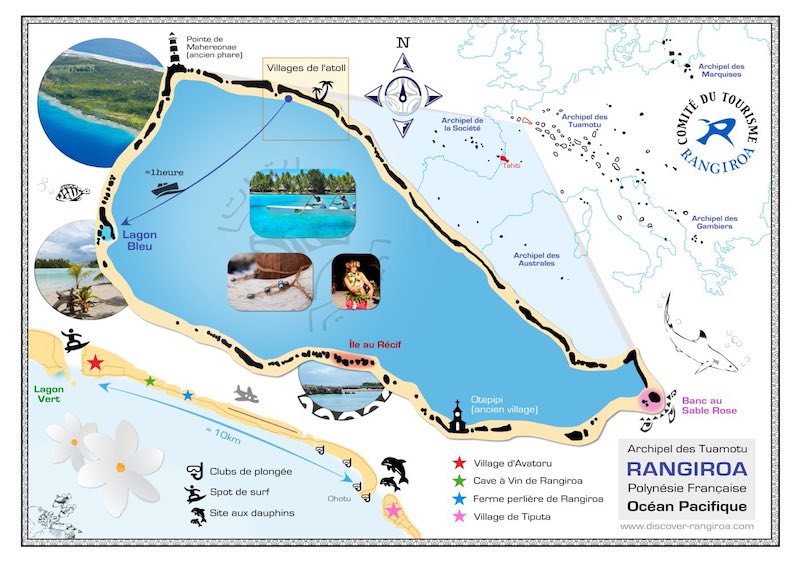
13Practical information
- 💰Currency — CFP franc (XPF).
- 🕒Time zone — UTC−10 (same time as Tahiti).
- 📶Phone / internet — Mainly the VINI network (Vodafone works rather poorly).
- 🏧Bank / ATM — One main ATM: Banque Socredo, at the airport.
- ⛽Fuel — One Shell service station (unleaded and diesel).
- ⚕️Health — Health centre, private doctor, pharmacy, nurses and physiotherapists.
- 🔌Electricity — European-type sockets, 220 V.
14Plan your stay in Rangiroa
Now that you know the atoll, prepare your trip:
?Frequently asked questions
Where is Rangiroa?
In the Tuamotu archipelago, in French Polynesia, about 355 km northeast of Tahiti.
What is an atoll?
A ring of coral reef and motu surrounding a lagoon, with no emerged volcanic relief.
How do you get to Rangiroa?
By plane from Tahiti (Faa'a), about a 1-hour flight with Air Tahiti and Air Moana.
How many days should you plan for Rangiroa?
3 to 4 days for a balanced first stay; more if you want a relaxed pace and the distant excursions.
What is the best time to come?
The dry season, May to October, for the climate; November to April for warmer diving water.
Can you drive around Rangiroa?
No: the lagoon is too vast and the ring is discontinuous. You travel by boat to reach most of the sites.